
Body Fat Set Point Theory

Who has come across the term Body fat set point theory?
This is commonly refereed to within the health and fitness industry and it is important to create awareness to individuals about this Theory. You may find that from gaining knowledge regarding the body fat set point this may help you understand and resonate with your own personal physique goals, experience and results.
The body fat set point theory is defined as: “a biological control method in humans that actively regulates weight towards a predetermined set weight for each individual”
Or in other words, the body fat set point is a tightly controlled range that your natural body fat likes to sit at (aka. settling point). In most cases your body will try its best to defend that range.
You are not burdened to be stuck at your natural body fat range your whole life, and it is of course most possible to go either above, or below this set point. However there are biological mechanisms in place which will try to regulate how long you are outside of the set point ranges.
This range of body fat is controlled by the size of your individual fat cells (adipose cells). Fat cells play a crucical role in the body with their main functions consisting of;
The storage of triglycerides
To produce and secrete hormones
To regulate body temperature
Leptin is hormone that is secreted from fat cells and plays a vital role in the regulation of appetite & metabolism (aka. the satiety hormone). Leptin sends signals to the hypothalamus in the brain influencing appetite and indicating levels of satiation.
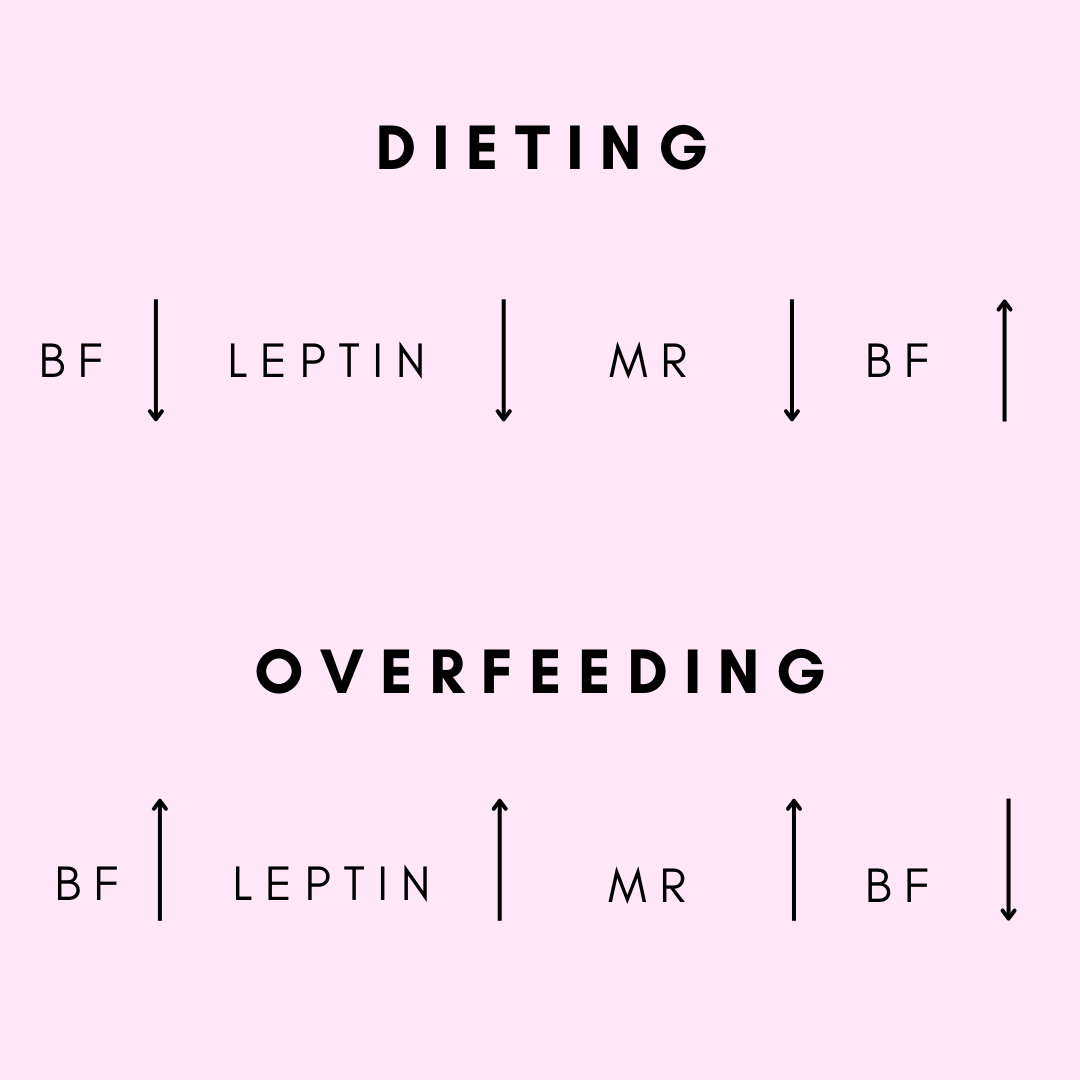
When you diet, your body fat decreases, fat cells shrink and as a result your leptin levels go down. This process causes a decrease in metabolic rate and increase in huger and that is typically what causes body fat to return to normal (aka. your bodies defence mechanism of the body fat set point).
So how does this apply with over feeding?
When overfeeding or in a caloric surplus, body fat goes up, leptin goes up and increases your metabolic rate, and as results decreases your hunger trying to get your body fat to go back down again.
So, if body fat set point is controlled by leptin then how do people become obese?
A study was conducted on mice, Levin, Barry & Keesey, Richard. (1998)
To summarise the study,
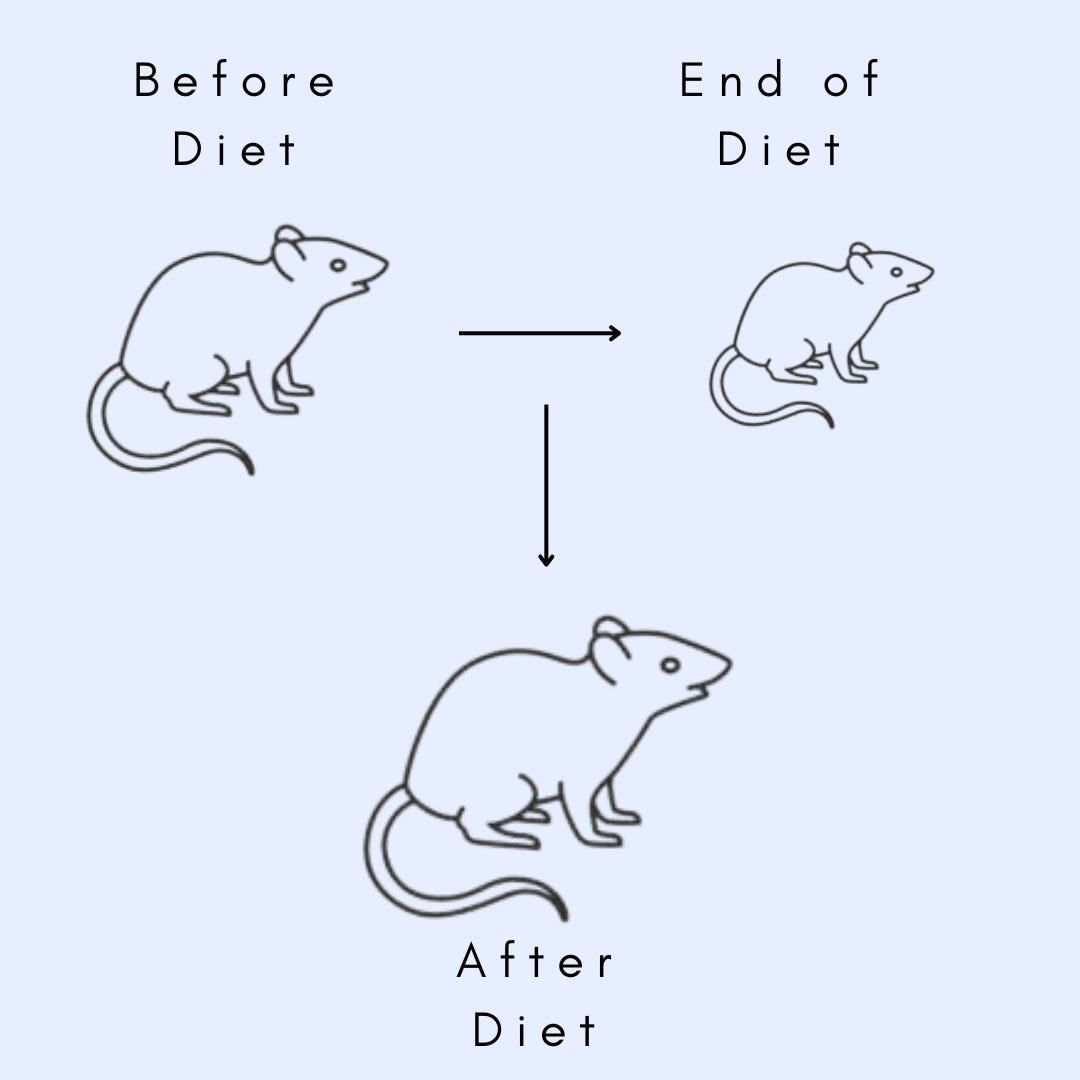
Before commencing the diet the mices bodies contained a certain amount of fat cells. During the process of caloric restriction the amount of fat cells shrunk within the mice. After dieting, the mices leptin levels became low, thyroid hormone was low, appetite was high the mice returned to their normal eating behaviours which resulted in a period of overfeeding. During the overfeeding the size of the fat cells stayed relatively the same BUT they increased in volume by 50%, this process is known as pre adipocyte differentiation.
Pre adipocytes are precursor cells that develop into adipocytes when the demand for extra cells to accomodate for triglycerides needs accomodaing.
The rats eventually returned to their original body weight, with the same fat mass, and same adipose cell size. BUT this is when it was identified that each individual fat cells size was smaller, and therefore still signalling a deficit.
They found that the mices leptin & hunger signals did not normalise, until they relapsed above their original (starting) weight with their fat cell size returning to exact same size as before (aka the original settling point).
Therefore, obesity can occur as a result of overfeeding post diet. This is because although fat cells return to their normal size, additional fat cells can be created (pre adipocyte differentiation) during the period of overfeeding, which results in overall body fat mass being grater, and a reprogrammed body fat settling point.
To conclude..
The literature contained in this study provides evidence that it is possible, when drastically overfeeding (binge eating) to can create new fat cells. With new fat cells means there is greater potential for fat storage.
But don’t worry if this is you, or you’ve been there then I can help!
Stay tuned for my next Newsletter where I will discuss ways to overcome post diet regain!
Your Coach,
Celeste